
Yun Zhi: the history of turkey tail in traditional Chinese medicine
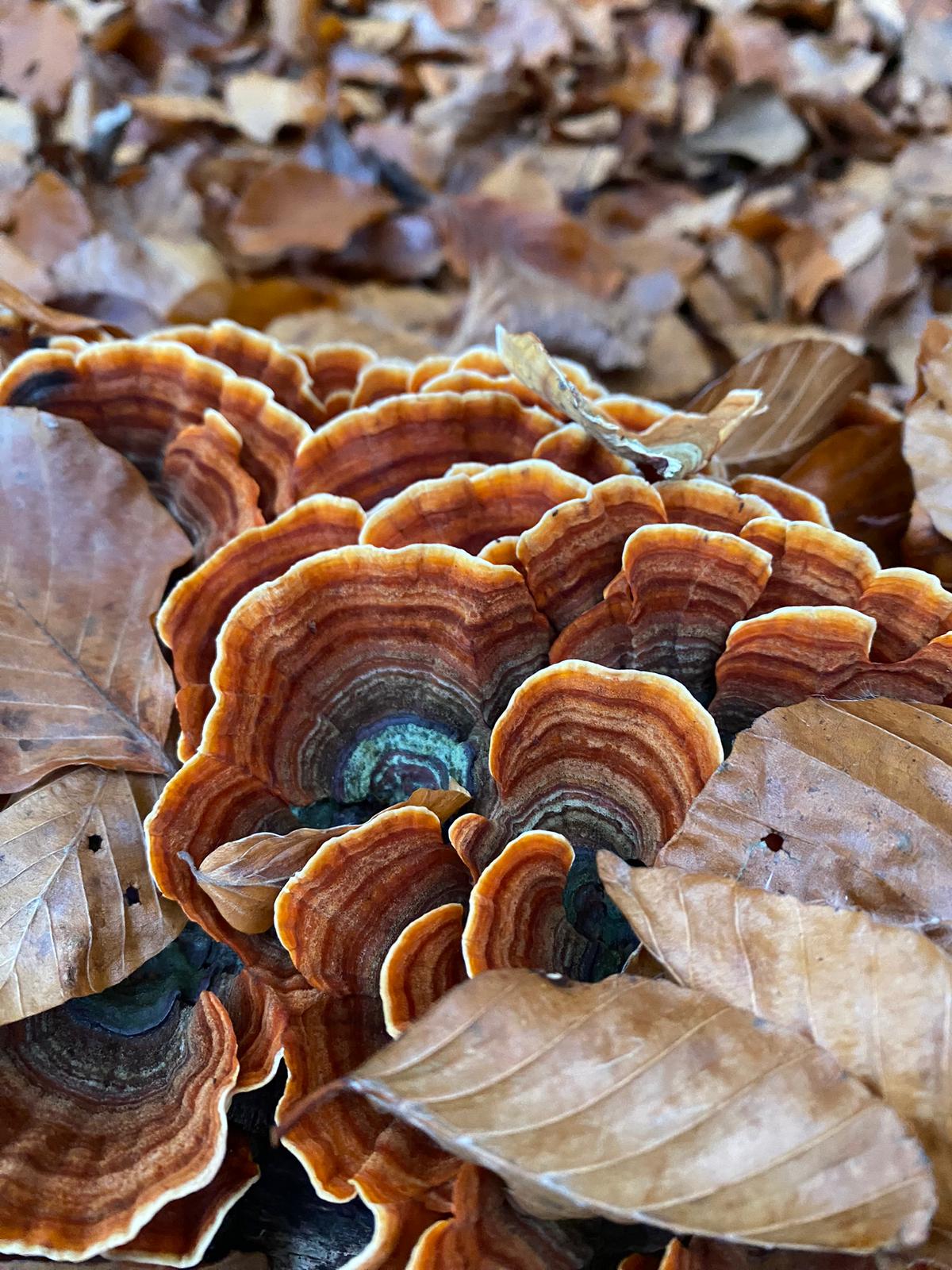
The turkey tail mushroom (Trametes versicolor), known in traditional Chinese medicine as Yun Zhi (云芝, meaning "cloud mushroom") and in Japan as Kawaratake ("roof mushroom"), represents one of the most ancient and revered mycological remedies in the Asian pharmacopeia. Its therapeutic use dates back thousands of years, establishing itself as a fundamental pillar in the treatment of various ailments, especially those related to strengthening the immune system and supporting oncological processes.
The Ancestral Origins of Yun Zhi (Turkey Tail) Use
Although the oldest and most comprehensive written documentation about Yun Zhi dates from the 15th century during the Ming Dynasty, historical records suggest that its medicinal use in China extends back more than 2,000 years. According to the scientific journal Biomolecules, "its medicinal value as part of traditional Chinese medicine dates back at least 2,000 years," positioning it as one of the medicinal mushrooms with the longest documented use in Asia.
In the context of traditional Chinese medicine, Yun Zhi was classified among remedies that tonify Qi (vital energy), particularly associated with the Spleen-Pancreas and Stomach meridians. According to TCM principles, this mushroom was considered especially effective for strengthening the Earth element, helping to properly transform and distribute moisture in the body, reinforcing the production of energy and blood.
The Ming Dynasty
The Ming Dynasty (1368-1644) represents a crucial period for the consolidation and systematization of Chinese medical knowledge. It was during this era that the most comprehensive medical texts in Chinese history were compiled, many of which included specific references to the use of Yun Zhi. Multiple historical sources confirm that "there are records of medicinal recipes dating from the 15th century (Ming Dynasty in China), in which this mushroom was used."
During this period, six philosophical schools of Chinese medicine flourished, each with different but complementary approaches. The Ming era marked, according to various medical historians, "a great refinement of knowledge and use of the pharmacopeia," establishing most of the herbal formulas still used today. This was also considered the golden age of acupuncture and moxibustion.
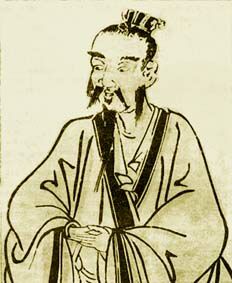
Portrait of Li Shizhen - Source: http://history.rsuh.ru/eremeev/china/086.htm
One of the most important texts of this era was the Grand Treatise on Materia Medica (Bencao Gangmu) by Li Shizhen (1518-1593), a monumental 52-volume work that revolutionized the classification of medicinal remedies. Although Li Shizhen focused primarily on plants, minerals, and other substances, his work established the methodological framework that allowed for the systematic documentation of all natural remedies, including medicinal mushrooms like Yun Zhi.
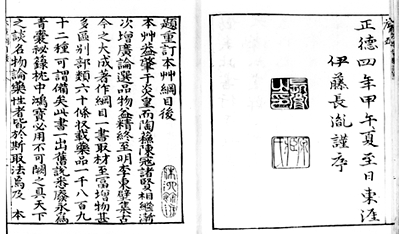
The Compendium of Materia Medica is a pharmaceutical text written by Li Shizhen (1518-1593) during the Ming Dynasty of China. Source: Wikimedia Commons
Documented Traditional Uses of Turkey Tail Mushroom in Traditional Chinese Medicine
According to traditional Chinese medicine texts, Yun Zhi was traditionally prescribed to:
- Strengthen physical and mental condition, increasing Qi energy
- Treat respiratory diseases, especially chronic lung ailments such as cough, wheezing, and asthma
- Eliminate pathogenic dampness from the body, improving digestive function
- Promote general health, strength, and longevity
- As a general tonic in cases of fatigue and general weakness
The National Cancer Institute of the United States documents that "this mushroom has been used in traditional Chinese medicine for many years to treat lung diseases," highlighting its historical role in treating respiratory conditions.
The Scientific Rediscovery in Japan and the Discovery of PSK
Although Yun Zhi had been used for millennia in Asia, it wasn't until the 1960s and 1970s that the modern scientific world turned its attention to this mushroom. The turning point came in 1971, when Japanese scientists successfully isolated from Trametes versicolor a protein-bound polysaccharide compound they called Polysaccharide-K (PSK), also known commercially as Krestin.
The name "PSK" comes from the Kureha Chemical Industries company, the Japanese company where a chemical engineer first isolated and developed the compound. The original term was "polysaccharide-Kureha," hence the abbreviation PSK. This discovery marked the beginning of decades of intensive research on the immunomodulatory properties of the mushroom.
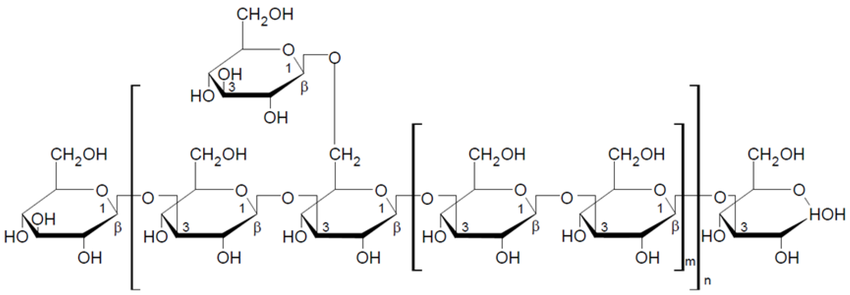
Chemical structure of the krestin (PSK) repeat unit, the bioactive polysaccharide-protein extracted from Trametes versicolor.
According to the journal Integrative Cancer Therapies, "PSK was first isolated in 1971 from the Coriolus versicolor mushroom (also known as Trametes versicolor or Yun Zhi), and has since been studied in Japan for its effects when used in combination with standard surgery, chemotherapy, and radiotherapy."
Medical Approval and Clinical Use of Turkey Tail
In 1977, just six years after its isolation, PSK was approved in Japan as an immunotherapeutic agent adjuvant for various types of cancer, including gastric, colorectal, and lung cancers. This approval made PSK one of the first products derived from medicinal mushrooms to receive official pharmaceutical recognition in a developed country.
The impact of PSK on Japanese medical practice was notable. By 1980, PSK had been incorporated as a standard complement to conventional oncological treatment in Japan, routinely administered along with chemotherapy and radiotherapy. Most significantly, this treatment was covered by government health insurance, reflecting the level of institutional acceptance it achieved.
In China, in parallel, a similar compound called PSP (polysaccharide-peptide) was developed, isolated from the COV-1 strain of the same mushroom. Although both products share structural and functional similarities, Chinese PSP showed in some studies an even more potent immunomodulatory effect than its Japanese counterpart.
A systematic review published in Integrative Cancer Therapies (2015) examined 28 studies on the use of PSK for lung cancer, including 6 randomized controlled trials, 5 non-randomized controlled studies, and 17 preclinical studies. The results showed consistent improvements in various clinical parameters when PSK was combined with conventional treatments.
According to a meta-analysis published in Cancer Immunology, Immunotherapy (2006) by Sakamoto et al., which evaluated centralized and randomized clinical trials on the use of PSK as an adjuvant in patients with curatively treated colorectal cancer, significant improvements in patient survival were documented.
From Traditional Use to Contemporary Research
The history of Yun Zhi represents a fascinating example of how millennial traditional knowledge can converge with modern scientific research. What began as an empirical remedy used by Chinese physicians for more than 2,000 years has evolved to become one of the most studied medicinal mushrooms in the world, with more than 400 scientific publications dedicated to investigating its properties.
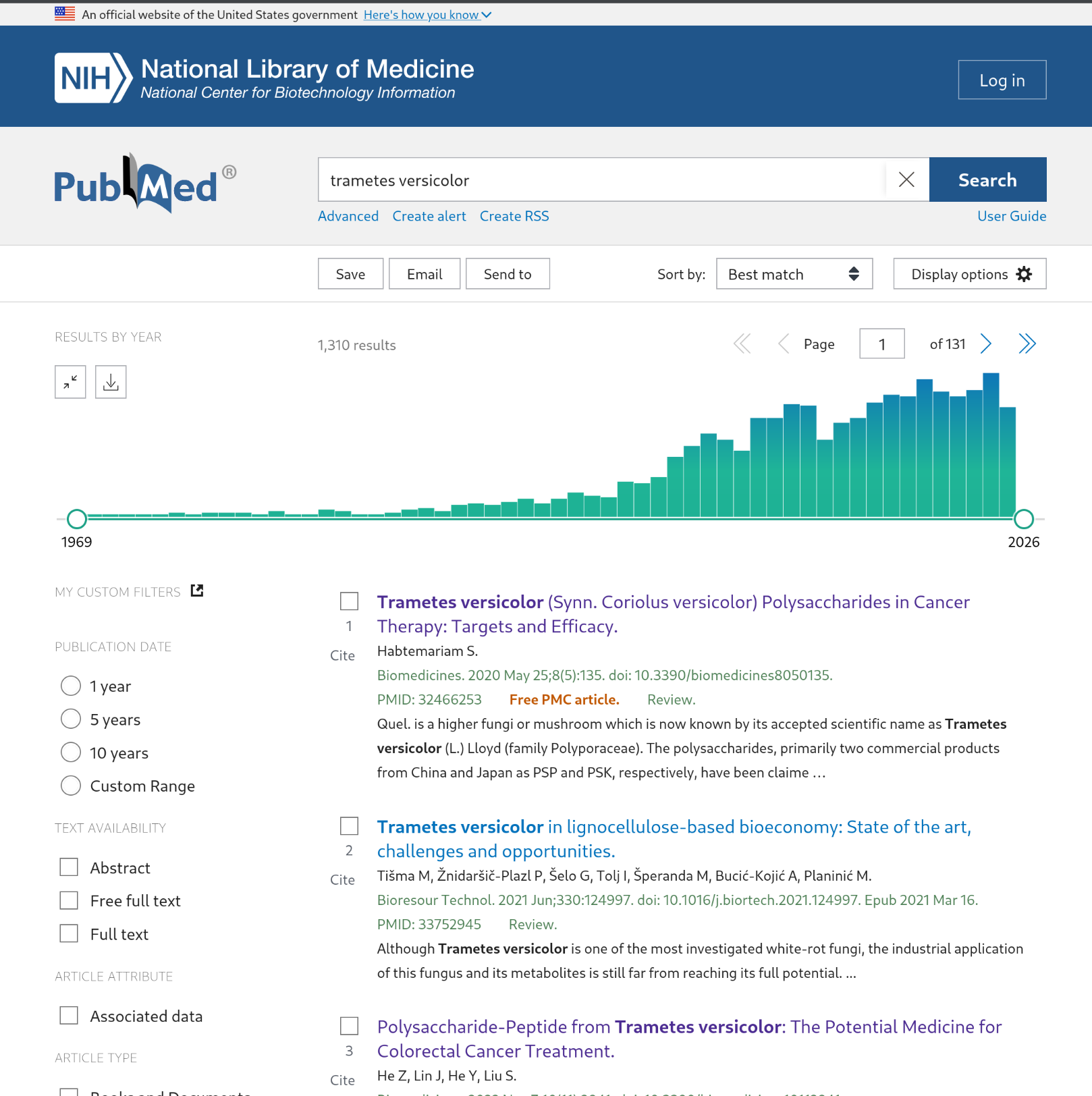
A glance at PubMed reveals over 1,300 publications on Trametes versicolor. Decades of research support its reputation as one of the most studied medicinal mushrooms in the world.
Currently, as the National Cancer Institute notes, "more than 100 species of medicinal mushrooms are used in Asia," but Trametes versicolor stands out for its extensive historical documentation and solid base of scientific evidence. The Cochrane Database, one of the most respected sources of systematic medical reviews, has published specific analyses on the use of Trametes versicolor to reduce adverse effects of chemotherapy or radiotherapy in people with colorectal cancer.
Sources
- National Cancer Institute (NIH). "Medicinal Mushrooms (PDQ®) – Health Professional Version". https://www.cancer.gov/espanol/cancer/tratamiento/mca/pro/hongos-pdq
- Fritz H, Kennedy DA, Ishii M, et al. "Polysaccharide K and Coriolus versicolor Extracts for Lung Cancer: A Systematic Review". Integrative Cancer Therapies. 2015;14(3):201-211.
- Saleh MH, Rashedi I, Keating A. "Trametes versicolor (Synn. Coriolus versicolor) Polysaccharides in Cancer Therapy: Targets and Efficacy". Biomolecules. 2020;10(1):135. PMC7277906.
- Sakamoto J, Morita S, Oba K, et al. "Efficacy of adjuvant immunochemotherapy with polysaccharide K for patients with curatively resected colorectal cancer: a meta-analysis of centrally randomized controlled clinical trials". Cancer Immunology, Immunotherapy. 2006;55(4):404-11.
- Pilkington K, Wieland LS, Teng L, et al. "Coriolus (Trametes) versicolor mushroom to reduce adverse effects from chemotherapy or radiotherapy in people with colorectal cancer". Cochrane Database of Systematic Reviews. 2022;11(11):CD012053.
- Wikipedia. "Trametes versicolor". https://es.wikipedia.org/wiki/Trametes_versicolor (Accessed December 2024)
- Wikipedia. "History of Traditional Chinese Medicine". https://es.wikipedia.org/wiki/Historia_de_la_medicina_tradicional_china (Accessed December 2024)
- Clínica Medizen. "Turkey Tail: The Cloud Mushroom (Part 11)". https://www.clinicamedizen.es/2024/02/26/cola-de-pavo-el-hongo-de-las-nubes-parte-11/
- MycoMedica. "Coriolus - Vital Mushrooms". https://www.mycomedica.es/coriolus.html
- Bio Eco Actual. "Trametes versicolor: Medicinal mushroom that stimulates the immune system". https://www.bioecoactual.com/2021/10/17/trametes-versicolor-hongo-medicinal/