
Growing mushrooms on logs: a gateway to fungal self-sufficiency

At Boscum we believe that mushroom cultivation is much more than a technique: it's a way to reconnect with natural cycles, to learn to produce food and health at home, and to recover traditional knowledge adapted to the modern world. Growing mushrooms on logs with mycelium plugs —also known as spawn dowels— is one of the most accessible, sustainable and rewarding ways to enter this universe.
This method, used for centuries in Asia and Europe, allows you to transform a simple wooden log into a recurring source of fresh, tasty mushrooms, full of nutritional properties that make them highly healthy. Whether you're a mushroom cultivation enthusiast, or you come from the world of horticulture, gardening or conscious eating, this article is for you.
What are mycelium plugs?
Mycelium plugs are small wooden cylinders previously colonized by the mushroom's mycelium. This mycelium is the "underground part" of the fungus, the organism that, with time and adequate conditions, will give rise to the mushrooms we harvest.
The great virtue of the plugs is that they greatly simplify the inoculation process: you just need to insert them into the log and seal them. This makes the system ideal for beginners, but also highly appreciated by experienced growers seeking reliable, low-maintenance results.

- Pack
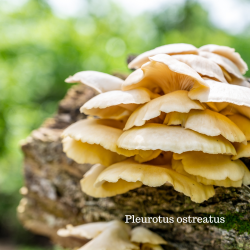
- Pack

- Pack
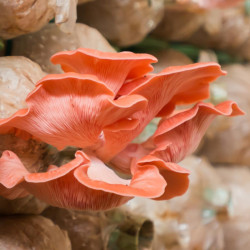
- Pack
Why grow mushrooms on logs?
Log cultivation has a special charm. It's slow, patient and deeply connected with the rhythm of the forest. Some of its main advantages are:
- Naturalness: fresh wood is used and the mushroom grows in a medium very close to its natural habitat.
- Low maintenance: once inoculated, logs require few interventions.
- Long-term production: the same log can produce mushrooms for several years.
- Mushroom quality: excellent texture, aroma and nutritional value.
- Self-sufficiency: ideal for vegetable gardens, gardens, farms or food forests.

Choosing the log: the foundation of success
Cultivation success begins with a good choice of wood. We recommend using logs or stumps:
- Hardwood (such as oak, beech or ash) for species like shiitake and lion's mane.
- Softer wood (such as poplar and alder) for species like common oyster mushroom and other oyster mushroom varieties.
- Recently cut (ideally between 1 and 4 weeks up to a maximum of 2 months).
- Healthy, without rot or damage to the bark.
The ideal sizes are logs between 10 and 15 cm in diameter and 90 to 120 cm in length, easy to handle and with a good reserve of nutrients for the mycelium.
Step by step: inoculating a log with plugs

1. Log preparation
With a drill or angle grinder and an 8.5 mm bit, holes about 4 cm deep are made following a diamond pattern, spaced approximately every 15 cm. This arrangement allows homogeneous colonization of the log.
2. Inserting the plugs
The myceliated plugs are inserted into the holes with the help of a hammer or mallet, until they are completely flush with the wood.
3. Sealing with wax
Once all the plugs are placed, the holes are sealed with food-grade wax (beeswax, food-grade paraffin or cheese wax). This step is key to protect the mycelium from drying out and from possible contamination.
Incubation: letting the mycelium work
Inoculated logs must rest in a shaded, cool and humid space. Ravines, areas near streams or garden corners protected from direct sunlight are ideal.
During this period:
- Logs can be stacked in open towers or placed on the ground.
- Make sure they don't dry out or crack.
- In hot weather, it's advisable to water them occasionally or even submerge them in water.

Incubation time varies depending on the species and wood:
- Shiitake: approximately 9–18 months.
- Lion's mane: 6 to 12 months
- Oyster mushroom: between 3 and 6 months.
Fruiting and harvest

When the mycelium has completely colonized the log, the most anticipated moment arrives: fruiting.
Logs can be placed upright, in a cabin shape or leaning, always in a space with good ventilation and shade. Maintaining humidity is essential, especially during dry periods.
In the case of shiitake, fruiting can be induced by submerging the log in cold water for 24 hours. After a few days, the mushrooms will begin to appear.
Harvest is done by cutting the mushrooms at the base with a clean knife, when they have reached optimal size.
An invitation to grow with Boscum
At Boscum we dedicate ourselves to the cultivation of medicinal mushrooms, the production of extracts and offering self-cultivation products designed so that anyone can begin their own journey in the world of fungi.
Our myceliated plugs and work tools are selected and produced with criteria of quality, vigor and respect for the environment. If you want to get started in mushroom cultivation on logs or expand your project, we invite you to visit our self-cultivation section.
Growing mushrooms is sowing time, patience and healthy food. And the forest, sooner or later, always responds. Contact us if you need expert advice.