
From waste to resource: how mushrooms transform agricultural, forestry and industrial by-products into food and health
We live in a society that generates tons of waste every year. A good part of these are agricultural, forestry and industrial by-products that often end up unused: straw, pruning remains, wood sawdust, coffee grounds or bagasse from beer and wine. What was traditionally considered "worthless" today can be converted into a resource thanks to fungiculture, mushroom cultivation.
Mushrooms not only offer us delicious and nutritious food, but can also be a key tool for advancing towards a circular economy, where waste is transformed into new opportunities.
What are by-products and why do they have potential
When we talk about waste, we often think of useless garbage. But many materials that come from agriculture, forest management or industry are not waste per se, but by-products: remains that can still have a journey if managed properly.
Common examples:
- Agricultural: cereal straw, pruning remains, almond shells, corn.
- Forestry: sawdust, bark, fine branches and remains from selective cuts.
- Industrial: coffee grounds, beer and wine bagasse, carpentry by-products.
All these materials are rich in lignin and cellulose, precisely the nutrients that mushroom mycelium needs to grow.
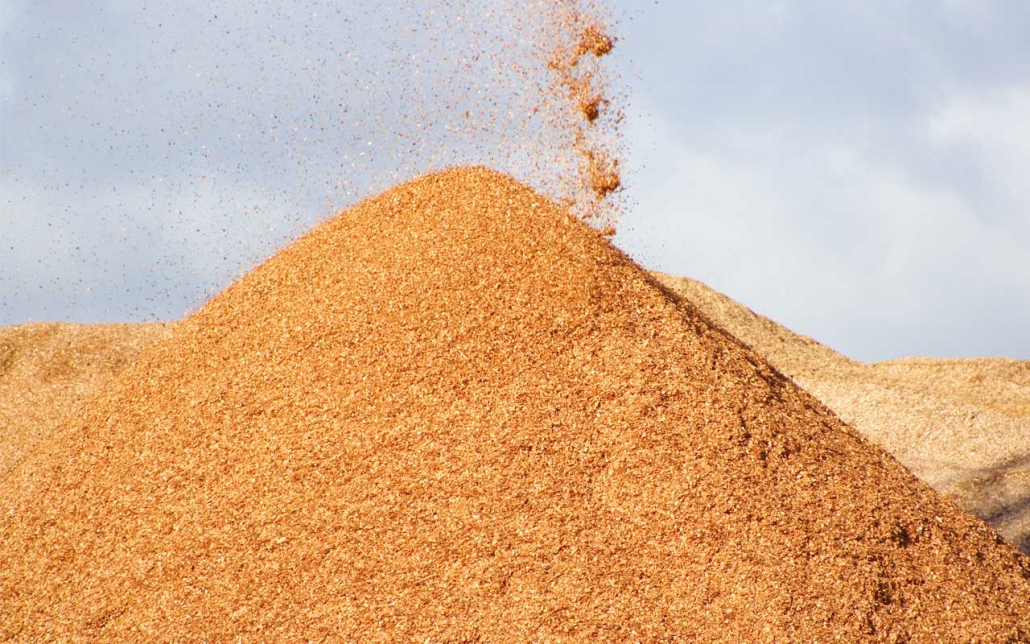
Wood sawdust from wood processing. (Source: https://www.joanolive.com/productes/ )
The role of fungi in the circular economy
Fungi have an extraordinary ability: they can degrade complex organic matter that other organisms cannot use. Thanks to this process, they convert what seemed like a problem into a valuable resource.
In this way, low-cost materials that are often difficult to manage are transformed into high-quality food and even medicinal products with high added value. Mushrooms thus become a bridge between waste and regeneration.
Specific cases of by-product use in mushroom cultivation
- Coffee remains: increasingly popular as substrate for oyster mushroom cultivation (Pleurotus ostreatus).
- Sawdust and forest remains: ideal base for cultivating medicinal mushrooms like reishi (Ganoderma lucidum), shiitake (Lentinula edodes) and hericium or lion's mane (Hericium erinaceus).
- Beer or wine bagasse: used to grow gourmet mushrooms, closing the food production circle.
- Other examples: almond shells, rice straw, corn remains or even wood bark.
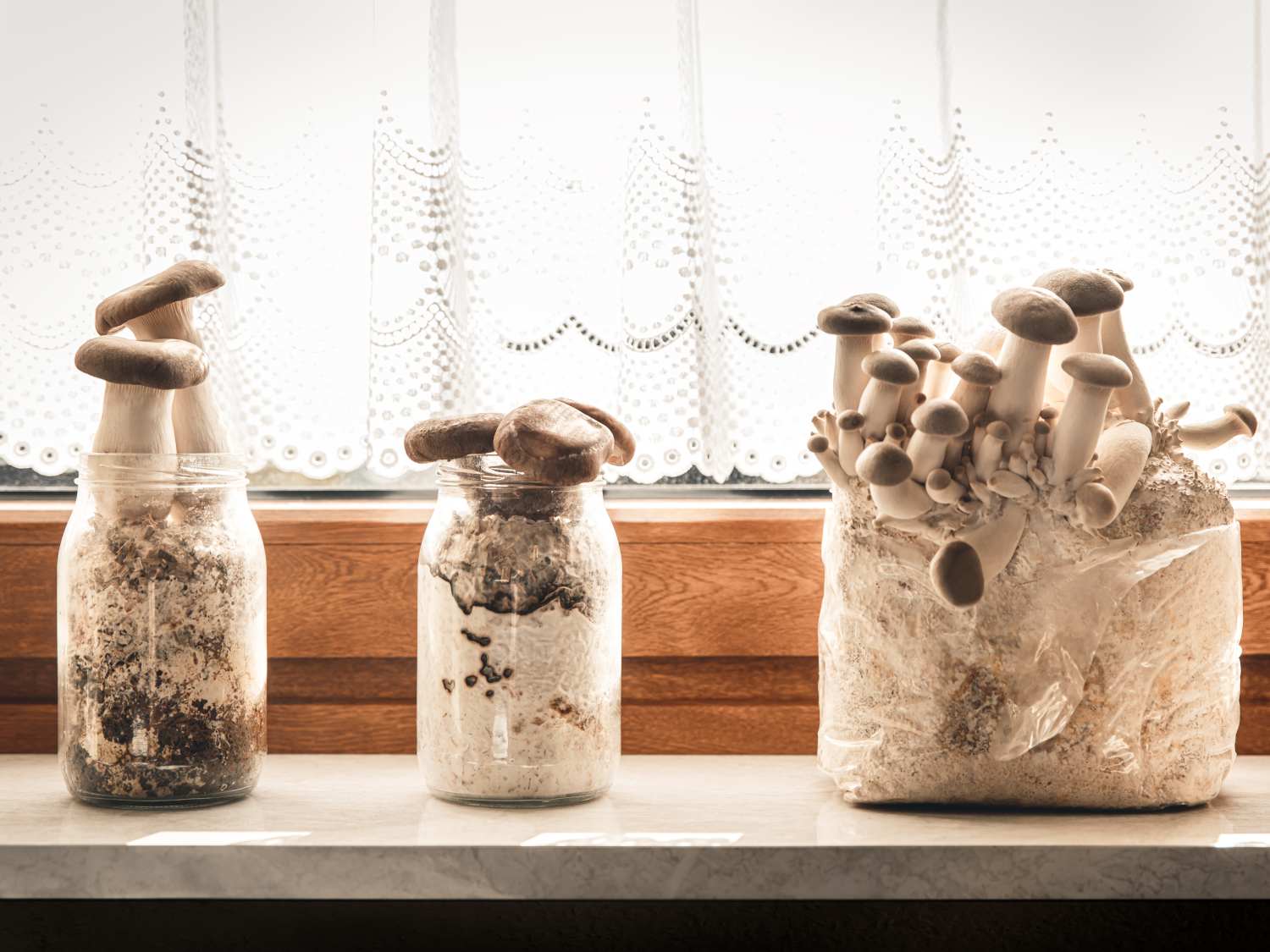
Cultivation variations in transparent containers; mushrooms developing on coffee ground substrate. (Source:https://www.nature-and-garden.com/gardening/oyster-mushroom-coffee-grounds.html )
Forest by-products have special interest: they come from sustainable forest management and, instead of being burned or accumulated, can give rise to mushroom production that provides economic value and reduces fire risk.
At Boscum we use wood sawdust from controlled tree felling from La Garrotxa (Catalonia, Spain) and local organic cereal bran for the production of our cultivation substrates.
Environmental and social benefits of by-product utilization
Using agricultural, forestry and industrial by-products for mushroom cultivation has a very positive impact:
- Reduces waste volume and emissions associated with its management.
- Provides an outlet for forest by-products, helping to prevent fires and improve forest health.
- Generates economic opportunities in rural and urban environments.
- Strengthens the local bioeconomy, as what is produced in each territory is valued.
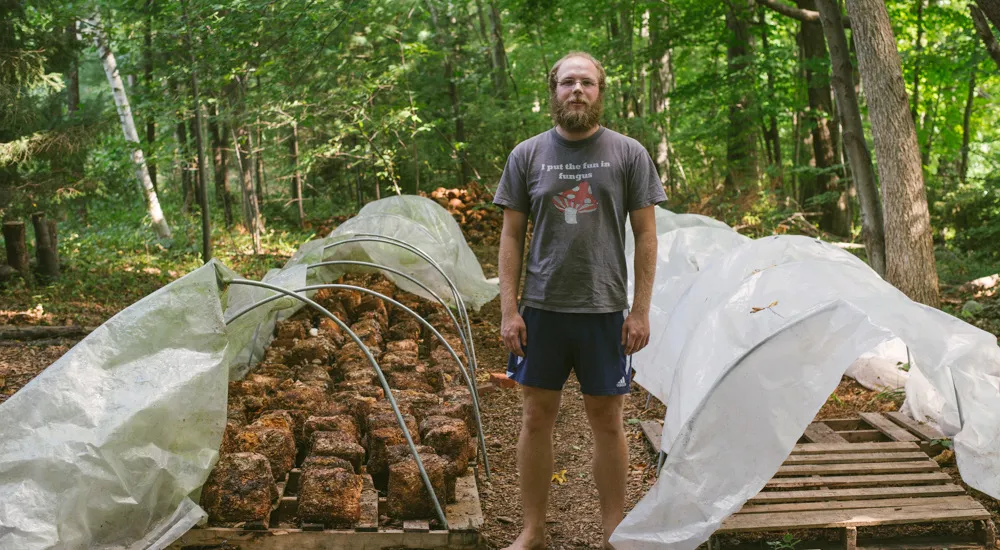
Using environmental resources to solve community challenges. (Source: smallfarms.cornell.edu)
In some urban projects, even restaurants and cafeterias collaborate to use coffee grounds and convert them into fresh mushrooms that they can then offer to their customers.
Cultivated mushrooms: health food with added value
Mushrooms cultivated on by-products are not only sustainable and nutritious. They are also a source of bioactive compounds such as beta-glucans, antioxidants and other molecules beneficial for the immune system and general health.
This is the natural connection point with mycotherapy. At Boscum, for example, we transform mushrooms like reishi, hericium or chaga into organic liquid extracts, which concentrate their properties and make them easily accessible in daily life.


Is the future fungal?
Fungiculture based on by-products has a long way to go. In addition to food and health, mushroom mycelium is already being used to develop bioplastics, biodegradable packaging materials and even sustainable alternatives to leather and insulating foam.
Forest by-products can also be a fundamental pillar in this future, turning forest management into a source of raw material for innovative and sustainable projects. What was once seen as a problem today reveals itself as an opportunity. Fungiculture shows us that waste can become valuable resources and that mushrooms have a key role in the transition towards a circular and sustainable economy.
Fungi are masters at transforming, and we just need to give them the right context to do their magic.
References
- Grimm, D., Wösten, H.A.B. Mushroom cultivation in the circular economy. Appl Microbiol Biotechnol 102, 7795–7803 (2018). https://doi.org/10.1007/s00253-018-9226-8
- Scholtmeijer, K., van den Broek, L., Fischer, A., van Peer, A. Potential Protein Production from Lignocellulosic Materials Using Edible Mushroom Forming Fungi. J. Agric. Food Chem 71, 11, 4450–4457 (2023) https://doi.org/10.1021/acs.jafc.2c08828
- Jayaraman,S., Brijesh Yadav, B., Dalal, R.C., Naorem,A., Sinha, N.K., Rao, C, S., Dang, Y.P., Patra, A.K., Datta, S.P., Subba Rao. A. Mushroom farming: A review Focusing on soil health, nutritional security and environmental sustainability. Farming System, 2, 3 (2024). https://doi.org/10.1016/j.farsys.2024.100098
- Van Steenwijk HP, Bast A, de Boer A. Immunomodulating Effects of Fungal Beta-Glucans: From Traditional Use to Medicine. Nutrients. 2021; 13(4):1333. https://doi.org/10.3390/nu13041333