
Golden Oyster Mushrooms Gone Rogue: An Invasive Threat to Fungal Biodiversity
What Are Golden Oyster Mushrooms?
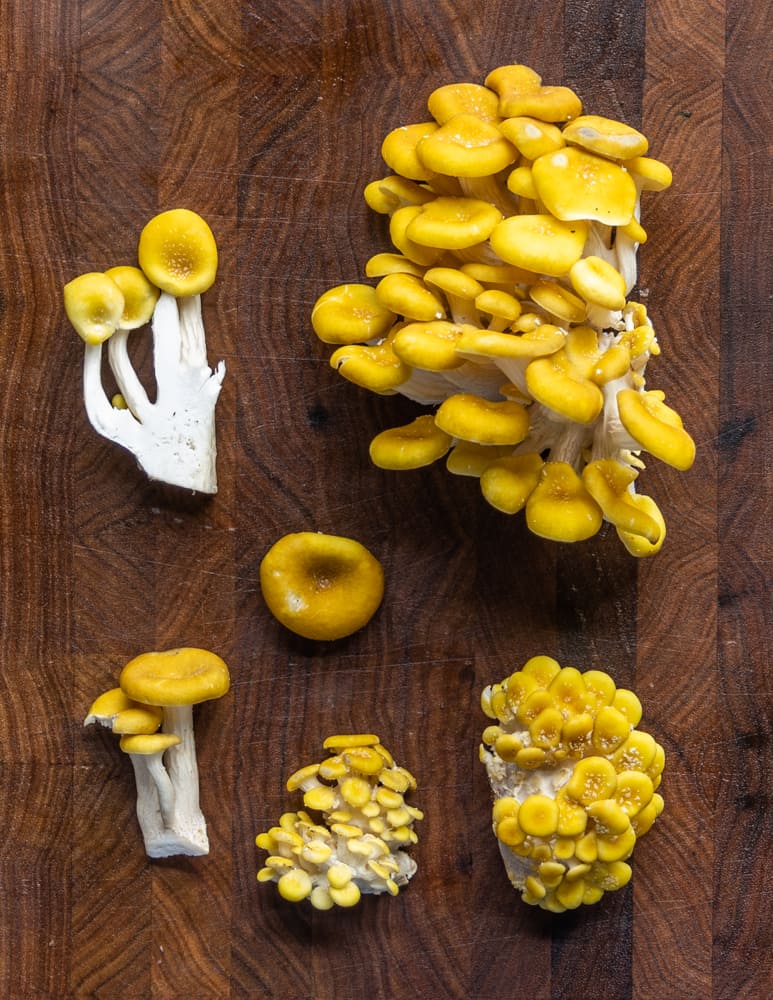
Golden Oyster Mushrooms prepared for cooking (Source: https://foragerchef.com/foraging-golden-oyster-mushrooms-pleurotus-citrinopileatus/)
The golden oyster mushroom (Pleurotus citrinopileatus), also called the yellow oyster, is a wood-decay fungus native to East Asia. In its homeland (eastern Russia, northern China, Japan), it’s a prized edible known for bright yellow clusters and rich umami taste. About 20–25 years ago, growers introduced this species to North America for cultivation. It thrived in farms and home grow kits – so much so that golden oysters became a popular choice for mushroom-growing enthusiasts.
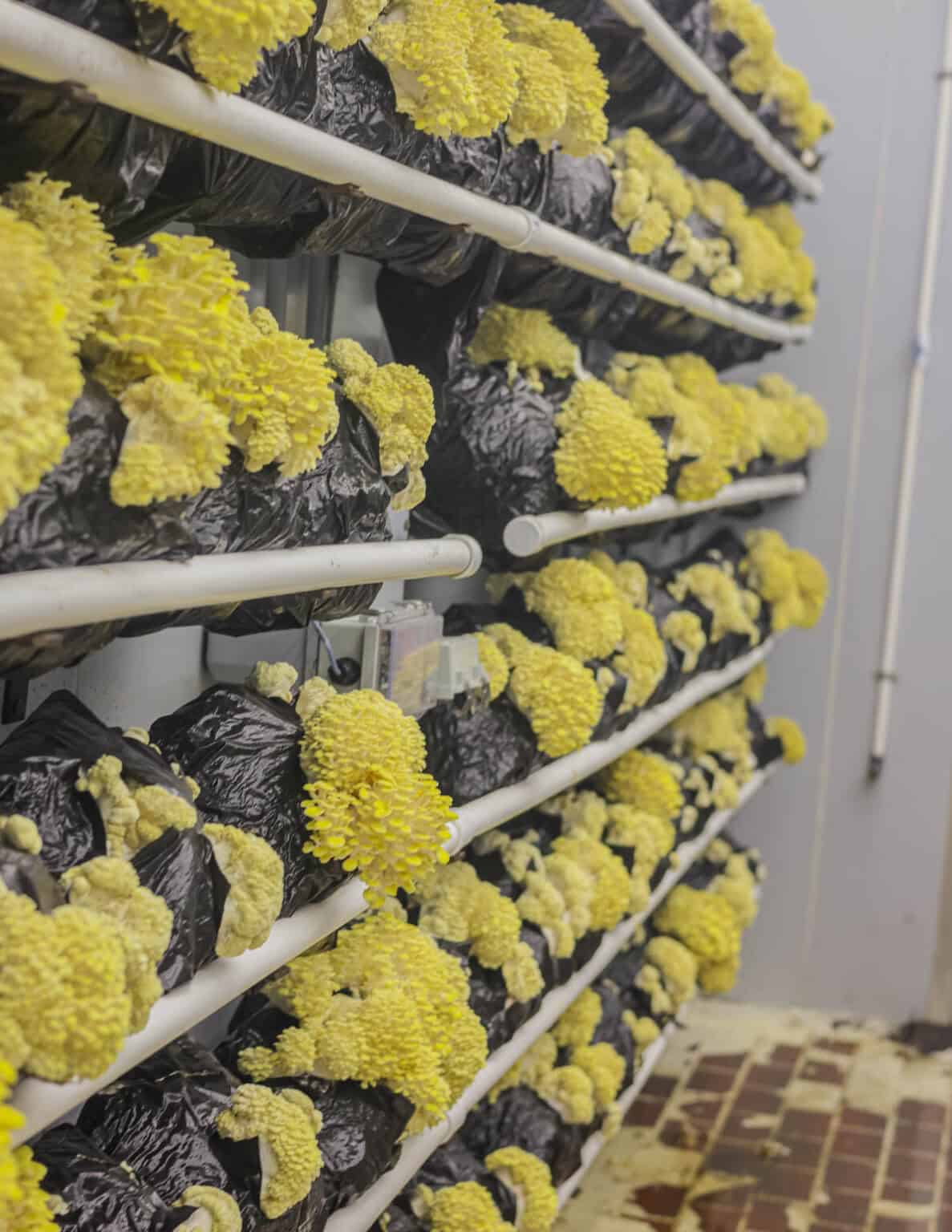
This species is a type of “white-rot” fungus that grows primarily on hardwood trees, breaking down tough wood components. In cultivation, that translates to fast growth and high yields on sawdust or straw. By the early 2000s, golden oyster mushrooms were being sold in mushroom growing kits across the U.S. and beyond. These kits allowed anyone to grow the cheerful yellow mushrooms in their home or backyard. Unfortunately, along with the culinary delight came an unintended consequence: spores and mycelium “escaping” into local ecosystems where golden oysters are not native.
From Kitchen to Forest: An Edible Fungus Goes Invasive
Golden oysters represent one of the first documented cases of a cultivated mushroom turning invasive in the wild. Around 2010, bright yellow oyster mushrooms began appearing on dead trees in the Midwestern United States – places far outside this fungus’s natural range. Scientists suspect the invader got loose through human activity. It may have originated from commercial mushroom farms, or from spores released by backyard growers using mail-order kits.
Once established, the golden oyster mushroom proved it could survive and reproduce in North American forests. In just the last eight years, it has been reported in 25 U.S. states and at least one Canadian province. The Midwest and Great Lakes region have seen particularly explosive growth of this species. And it’s not only a North American phenomenon – golden oysters are already considered invasive in Switzerland and have been found in the wild in parts of Europe like Italy, Hungary, Serbia, and Germany. This rapid spread highlights a broader point: fungi can be invasive just like plants or animals, even though we’ve historically paid less attention to fungal invasions.
Several factors make golden oysters successful invaders. Their microscopic spores are easily carried by wind and can travel long distances. They favor warm, moist climates and readily colonize hardwood logs – habitats common in many temperate forests. Additionally, years of selective breeding in cultivation may have given them a competitive edge. Researchers speculate that strains bred for fast growth and productivity can outgrow wild fungi when they enter a forest setting.
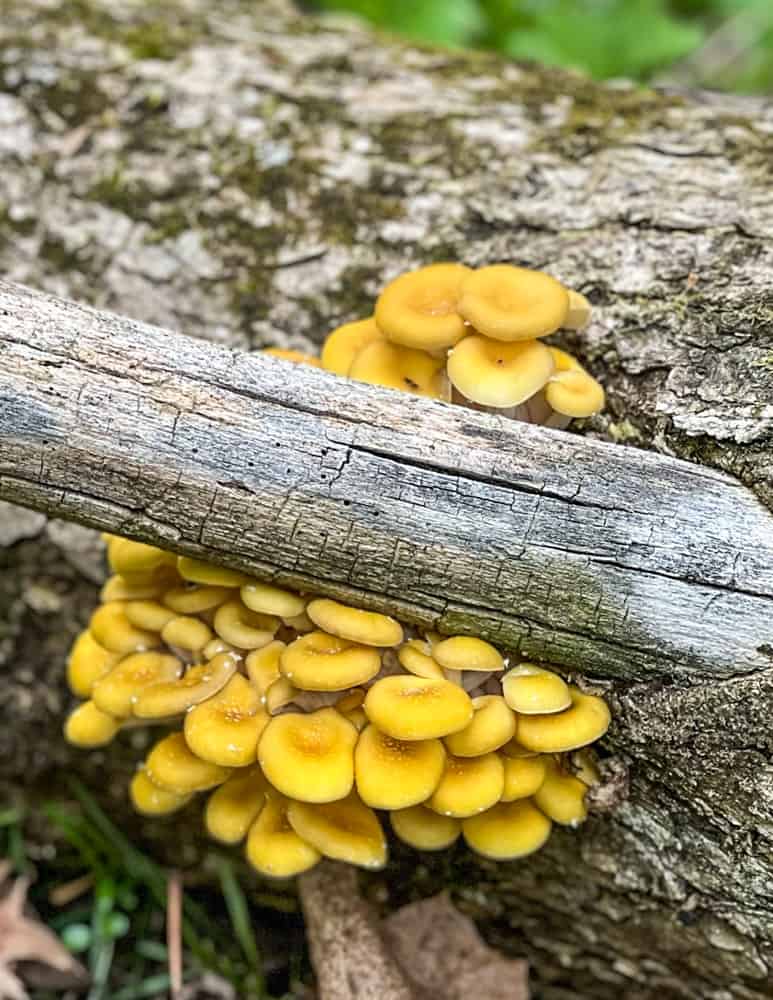
Impact on Native Fungal Communities
What happens when golden oyster mushrooms move into a new forest?
Recent research published in Current Biology offers a stark answer. A 2025 study by Veerabahu et al. examined fungi living in dead elm trees in Wisconsin – some of the trees had golden oysters on them, others did not. The results were striking: trees colonized by golden oysters hosted only about half the fungal species that uninvaded trees did. In other words, the invader was crowding out the native fungal community. DNA sequencing of the wood revealed that fungal diversity and community composition changed significantly when golden oyster was present, with many native decomposers absent or reduced.
Why does this loss of fungal biodiversity matter?
For one, native fungi play critical roles in ecosystems. Diverse communities of wood-decay fungi break down dead trees at a natural pace, cycling nutrients and carbon. Golden oyster mushrooms, by contrast, might accelerate wood decomposition, since as a white-rot fungus they break down all components of wood quickly – potentially releasing carbon dioxide faster than slower native decomposers (like brown-rot fungi) would. Researchers observed that dead elm logs with golden oysters had fewer other decay fungi. They worry that if golden oysters “muscle out” those competitors, dead trees could decompose faster, shortening the period they remain as habitat for wildlife. Standing dead trees (snags) serve as shelters for birds, bats, and other creatures, and once fallen, rotting logs create nursery spots for seedlings. Rapid decay by golden oysters could diminish these habitat values, effectively making dead wood vanish sooner from the forest ecosystem.
Another concern is the loss of unique native fungi with unknown benefits. Some fungi pushed out by the golden oyster (such as certain polypores and crust fungi) might produce specialized enzymes or compounds. In fact, many medicines – from penicillin to cholesterol drugs – have been derived from fungi. As one mycologist pointed out, “Fungi are sources of revolutionary medicines… The value of undiscovered, potentially useful chemicals can be lost when invasive species push others out.” In short, an invasive mushroom can erase native fungal lineages that might have yielded the next important antibiotic or other bioactive compound.

A Growing Problem: Fungi as Invasive Species
The golden oyster mushroom case shines light on an overlooked aspect of conservation biology: fungi can invade new environments and disrupt ecosystems, just like invasive plants or insects do. Invasive fungi are not just theoretical – examples already exist. A deadly pathogenic fungus caused Dutch elm disease, devastating elm trees across North America in the 20th century. The infamous death cap mushroom (Amanita phalloides), though native to Europe, has established itself in California’s oak forests and elsewhere. And the brightly colored “orange ping-pong bat” fungus (Favolaschia calocera), native to Madagascar/Asia, has spread in New Zealand and beyond. What’s unusual about Pleurotus citrinopileatus is that it’s an edible species introduced intentionally – the first known to “go feral” after being cultivated for food.
Responsible Cultivation: What Growers and Foragers Can Do
Is it possible to enjoy cultivating or eating golden oyster mushrooms without endangering ecosystems? Experts emphasize that responsible practices are key. At present, there are no effective wildland management tools to eliminate golden oysters once they establish – you can’t easily eradicate a mushroom that spreads invisible spores. Prevention is critical. Biologists have even suggested halting the sale of golden oyster grow kits altogether to stop any new introductions. One of the study’s authors advises, “I recommend that people consider refraining from using golden oyster mushroom grow kits to prevent any new introductions.” For those who do grow them (or sell them), she urges adding clear warnings that this species is invasive and should be grown only indoors and never disposed of outdoors.
If you’re a mushroom cultivator or hobbyist, here are some steps to cultivate responsibly and curb the spread:
- Keep cultivation contained. Grow golden oysters indoors or in enclosed greenhouses, not out in the open. This helps prevent spores from catching the wind and finding nearby woods.
- Never dump spent substrate in nature. Do not compost used mushroom blocks or growing medium outdoors where spores or surviving mycelium could take hold. Instead, seal and dispose of grow kit waste in the trash or thoroughly sterilize it.
- Prefer native species when possible. If you enjoy growing mushrooms at home, consider native or non-invasive strains for outdoor projects. Save the golden oysters for tightly controlled settings.
- Stay informed and alert. If you live in an area where golden oysters could thrive, be on the lookout. Foragers can help by harvesting invasive golden oysters in the wild (they’re edible, after all), which might give native fungi some breathing room. At the very least, do not release cultivated mushrooms into local woods intentionally.
At Boscum, we have the golden oyster in our strain library and recently began producing substrate blocks for cultivators. This new research is a reminder that we must lead by example in promoting safe cultivation. We are committed to educating our customers – for instance, through our oyster mushroom cultivation workshops, we teach proper handling and disposal of mushroom kits. Understanding the science behind the golden oyster’s invasiveness helps us and our community cultivate with caution. By following best practices (like those above) and perhaps exploring innovations – e.g. developing sporeless strains for hobby growers in the future – we can enjoy this tasty mushroom without contributing to an ecological problem.
Balancing Benefits and Risks
It’s important to note that the golden oyster mushroom isn’t “bad” in itself – in fact, it offers benefits that inspired people to spread it in the first place. Even as it upsets the balance in some forests, it’s become a food source for foragers and even impoverished communities in certain areas, providing nutrition where it’s needed. Its aggressive growth that worries ecologists also means it can be useful for processing agricultural waste, helping break down farm byproducts into compost. Any future management of this species will have to weigh these positive uses against the negative impacts on biodiversity.
For now, raising awareness is our best tool. The story of the golden oyster mushroom teaches a broader lesson: as we globalize and trade living organisms, we have to think about unintended consequences. Mushrooms might not roar like invasive lions or grow like kudzu vines, but they can quietly reshape the unseen foundations of our ecosystems. By treating fungal introductions with the same caution we give to other species, and by cultivating responsibly, we can prevent a beloved mushroom from turning into a menace. The golden oyster’s journey from gourmet delicacy to unwelcome invader is a call to action for mycologists, growers, and nature lovers alike – a reminder that biodiversity needs our vigilance, down to the humble fungi that flourish underfoot.
References:
Born, K. (2023) Invasive species: Golden Oyster Mushrooms, Circular Harvest. Available at: https://circularharvest.ca/blogs/fungi-research/golden-oyster-mushrooms-invasive-species-in-north-america (Accessed: 28 August 2025)
Chen, A.X. (2025) Invasive golden oyster mushrooms are crowding out native fungi and could slash biodiversity in forests, study suggests, Smithsonian Magazine. Available at: https://www.smithsonianmag.com/smart-news/invasive-golden-oyster-mushrooms-are-crowding-out-native-fungi-and-could-slash-biodiversity-in-forests-study-suggests-180987003/ (Accessed: 28 August 2025).
McCormick, C.A. (2025) Fungus (not quite yet) among us: Golden Oyster Mushroom Gone Rogue, North Carolina Botanical Garden. Available at: https://ncbg.unc.edu/2025/08/14/fungus-not-quite-yet-among-us-golden-oyster-mushroom-on-the-move (Accessed: 28 August 2025).
Stokstad, E. (2025) A mushroom that escaped from kitchens could be harming North American wildlife, Science. Available at: https://www.science.org/content/article/mushroom-escaped-kitchens-could-be-harming-north-american-wildlife (Accessed: 28 August 2025).
Veerabahu, A. (2025) The golden oyster mushroom craze unleashed an invasive species that’s harming native fungi, Phys.org. Available at: https://phys.org/news/2025-07-golden-oyster-mushroom-craze-unleashed.html (Accessed: 28 August 2025).
Veerabahu, A. et al. (2025) ‘Invasive golden oyster mushrooms are disrupting native fungal communities as they spread throughout North America’, Current Biology, 35(16). doi:10.1016/j.cub.2025.06.049.
Picture Source: https://foragerchef.com/foraging-golden-oyster-mushrooms-pleurotus-citrinopileatus/